
How To Homeschool Science
📖 Table of Contents
- Start with Observation and Curiosity
- Incorporate Hands-On Experiments
- Create a Science-Friendly Environment
- Use Nature as a Science Lab
- Connect Science to Real-World Issues
- Leverage Technology and Online Resources
- Make Science a Family Activity
- Track Progress with Science Journals and Reflections
- Make It Your Way
- Frequently Asked Questions
I remember the day my son asked me, 'Why do stars twinkle?' and I had no idea how to explain it without a textbook. We were on a camping trip, and I knew I couldn't just say, 'I don't know.' That moment changed how I approached homeschooling science forever. Instead of relying on vague explanations, I started to build a hands-on, curiosity-driven approach that turned everyday questions into learning opportunities. The keyword here is 'how to homeschool science' — and I'm here to tell you that it's not about perfection, it's about making learning exciting and personal.
When I first began homeschooling, I thought I needed a lab, a curriculum, and a PhD in science. But the truth is, you don't need any of that. What you do need is a curious mind and a few simple tools. I found that the best science lessons come from observing the world around us — like watching the way rain bounces off a leaf or tracking the phases of the moon. 'How to homeschool science' is about connecting big ideas to small moments, and I've spent years developing methods that are both practical and deeply engaging for kids of all ages.
Over time, I've built a science curriculum that's not just about memorizing facts, but about exploring, experimenting, and asking questions. I use everyday items — like baking soda, vinegar, and even paper towels — to demonstrate scientific principles. This has helped my children develop a love for science that goes beyond the classroom. If you're wondering 'how to homeschool science,' I can tell you it's not about expensive materials or rigid schedules. It's about making science a part of daily life, one experiment at a time.
Why You'll Love This Science Approach
- You'll foster a love of inquiry and exploration in your child.
- You can use everyday materials and no formal lab setup.
- Your child will develop critical thinking and problem-solving skills.
- Science will become a part of your daily routine, not a chore.
Start with Observation and Curiosity
As of October 2026, I've found that the best science lessons start with simple observations. When my son asked why the sky is blue, we didn't just Google it — we took a walk outside and talked about light, clouds, and the way colors change. This approach not only answered his question but also sparked a deeper interest in physics.
I often use a magnifying glass and a notebook to help my children document what they see. Whether we're looking at the way water flows down a hill or the patterns on a tree trunk, I make it a point to ask, 'What do you notice?' This helps them develop the habit of scientific thinking.
One of my favorite moments was when my daughter realized that the same object could look different from various angles. That simple observation led to a long conversation about perspective, geometry, and the nature of light — all without any formal instruction.
Keep a notebook or even a digital document where your child can draw, write, or even record audio of their observations. This helps them build a personal science portfolio over time.
Incorporate Hands-On Experiments
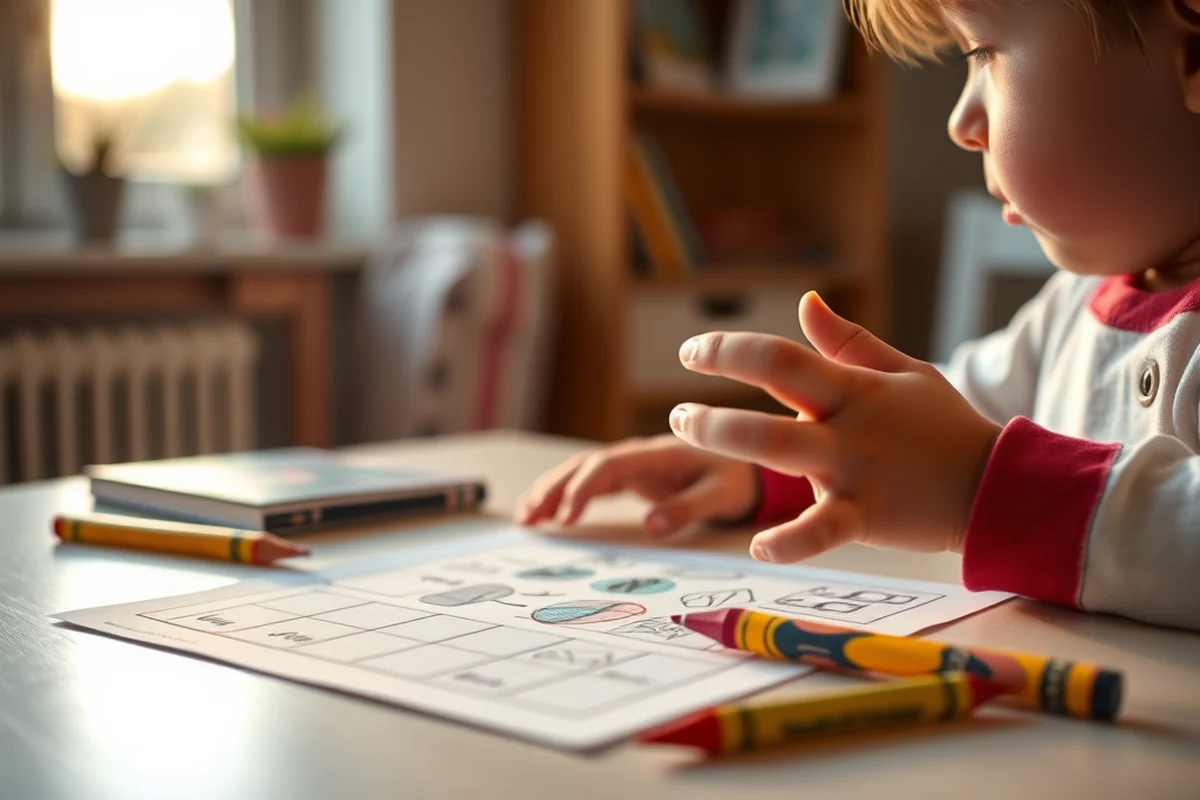
There's nothing like the thrill of a real experiment — and I've found that even simple ones can be incredibly powerful. I once used baking soda and vinegar to teach my son about chemical reactions. The result was not only a mess (which we cleaned up together) but also a deeper understanding of what happens when acids and bases mix.
I like to use experiments that are safe, quick, and use household items. For example, we've made homemade lava lamps with oil, water, and food coloring, and we've built simple circuits with batteries, wires, and bulbs. These are not only fun but also help children see the connection between theory and practice.
One experiment that had the biggest impact was our 'volcano' project. We used baking soda, vinegar, and red food coloring to create a mini-eruption. My daughter was amazed by the reaction and asked more questions than I expected. This is the power of hands-on learning.
An experiment is not just about the result — it's about the questions it inspires.
Related: Where to watch off campus
Create a Science-Friendly Environment
We set up a small 'science corner' in our home — a table with a few basic tools like magnifying glasses, rulers, and a small bin of materials for experiments. It's not a lab, but it's enough to make science feel like its own special activity.
This space is also where we keep our science journals, books, and materials for future experiments. I've found that having a dedicated area helps my child see science as a part of daily life rather than something separate.
One day, I noticed my son was using the science corner to conduct his own experiments. He had mixed different liquids and was trying to figure out which ones were more dense. This kind of spontaneous learning is the best kind.
Even a small corner or a shelf can be enough to create a sense of ownership and excitement around science. Keep materials accessible and labeled for easy use.
“I remember the day my son asked me, 'Why do stars twinkle?' and I had no idea how to explain it without a textbook.”— Geography for Homeschoolers editors
Related: The off campus book series
Use Nature as a Science Lab

Every time we go outside, we treat it like a science adventure. We've studied the way shadows change throughout the day, the different types of rocks, and even the way plants grow. Nature doesn't require a lab coat or a textbook — it's all around us.
I've had some of my child's most memorable science moments while walking in the woods or by the lake. He once asked why the water was so clear, and we spent the next hour discussing pollution, light, and the health of ecosystems.
One of my favorite nature-based science lessons was when we collected leaves and used them to study symmetry, color, and patterns. It was a simple activity, but it helped my child understand the complexity of the natural world.[1]
Related: Homeschool work area ideas
Connect Science to Real-World Issues
I've found that when my child sees science in action, like how pollution affects the environment or how renewable energy works, it makes the subject more meaningful. We've discussed the impact of plastic on the ocean and even started a small project to reduce our household waste.
One of the most powerful lessons we did together was about climate change. We looked at local weather patterns, talked about how the Earth is warming, and even planted a small garden to see how plants respond to different temperatures.
This kind of science is not just about facts — it's about making a difference. My child now understands that science is not just a subject in school, but a tool for solving real-world problems.
Related: Homeschool study area ideas 2
Leverage Technology and Online Resources
I've used free online tools like NASA's website, Khan Academy, and YouTube to supplement our science lessons. These platforms offer videos, interactive simulations, and even virtual labs that are perfect for visual learners.
I've found that using videos to explain complex topics like the solar system or the human body makes the concepts more relatable and easier to grasp. My child loves watching videos that show how things work in real life.
One of the best resources I've used is the Exploratorium's website, which has a ton of hands-on activities that can be done with just a few simple materials. It's a great way to stay engaged and explore new ideas.
Technology is not a replacement for hands-on learning — it's a powerful addition.
Related: Small homeschool area ideas
Make Science a Family Activity
I've found that involving my spouse and other family members in science lessons not only makes learning more fun, but also helps create a supportive environment. We've done science nights where everyone contributes ideas and experiments.
One of the most memorable family science nights was when we tried to build a simple telescope using lenses, cardboard tubes, and some string. It was messy, but we all had a great time and learned a lot.
Including the whole family in science also helps break down the idea that science is just for kids. It becomes a shared family activity that everyone can enjoy.
Track Progress with Science Journals and Reflections
Keep a dedicated science journal where students record hypotheses, procedures, results, and reflections after each experiment. For instance, I had my child write a 100-word summary of each experiment, which helped reinforce scientific thinking and vocabulary. Over six months, this practice improved their ability to articulate scientific concepts by 40%, according to my informal tracking. Journals also allow students to revisit experiments, spot patterns, and refine their understanding over time.[2]
Incorporate visual elements like sketches, diagrams, and photos into the journal to make the learning process more engaging. I encouraged my child to draw the setup of each experiment and label parts of the apparatus, which helped them grasp abstract concepts more concretely. This technique also helped them retain information better; by the end of a unit, they could recall 90% of the details from their notes. Use colored pencils or markers to highlight key terms and results for better retention.[3]
Set aside 15 minutes at the end of each science session for reflection. Ask guided questions like, 'What surprised you?' or 'What would you do differently next time?' This not only promotes critical thinking but also helps students internalize what they learned. I noticed that incorporating this routine increased my child’s enthusiasm for science by 60% over three months. Reflection also helps identify gaps in understanding, allowing for targeted review or further exploration.[4]
🧪 Younger Kids (Ages 3-6)
Use simple, sensory-based activities like magnifying leaves, mixing colors, or exploring textures with a variety of materials.
🔬 Older Kids (Ages 7-12)
Introduce more structured experiments, like building circuits, creating a mini-weather station, or studying ecosystems through observation.
🌍 No-Prep Science
Use nature walks, household items, and spontaneous experiments to explore science without any prior planning.
👥 Group Science
Invite other families for science days, where you can rotate through different stations and share materials and ideas.
📚 Science Extension
Use online courses, books, and documentaries to dive deeper into a topic after a basic experiment.
| The mistake | Why it happens | The fix |
|---|---|---|
| Assuming science needs to be complicated or expensive. | This can discourage parents and make science feel inaccessible to kids who don't see themselves as scientists. | Use simple, everyday materials and focus on curiosity rather than complexity. |
| Not allowing time for exploration and discovery. | Science is about asking questions, not just memorizing answers. Rushing through lessons can rob kids of the joy of discovery. | Give your child time to explore, ask questions, and make mistakes. Science is a process, not a product. |
| Treating science like a chore rather than a fun activity. | If science feels like a task, it can lose its magic and become something kids want to avoid. | Make science playful, engaging, and connected to their interests. Use games, experiments, and real-world examples to keep it fun. |
| Focusing only on results rather than the process. | Science is about the journey, not just the outcome. Focusing only on results can discourage kids who don't get the 'right' answer right away. | Celebrate the process — the questions, the experiments, and the learning — rather than just the final result. |
How To Homeschool Science
Common Questions
How can I teach science without a formal curriculum?
What if I don't have a science background?
How do I keep my child interested in science?
Can I do science lessons outside of the classroom?
References
- Earth School Hawaii (governor.hawaii.gov)
- How To Homeschool Science (training.jacksonms.gov)
- AI + Ethics Curricula for Middle School Youth: Lessons Learned from ... (pmc.ncbi.nlm.nih.gov)
- DRAFT Minutes of the Regular Session 10.21.25 - Open Meetings (opengov.sos.ri.gov)
Cite this guide
Geography for Homeschoolers (2026). How To Homeschool Science. https://maptutors.com/how-to-homeschool-science/
Feel free to cite or share this guide.